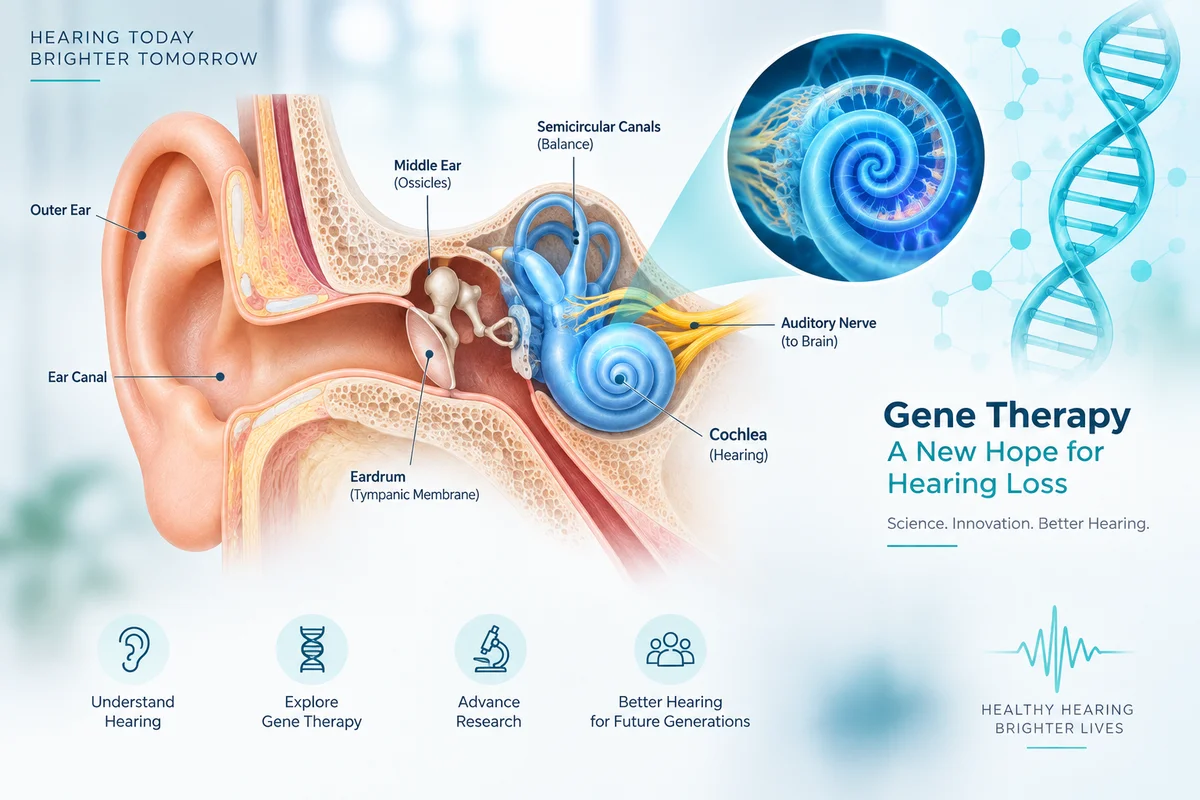
Hearing-loss research is moving beyond traditional approaches such as hearing aids and cochlear implants. Scientists are investigating how damage to the inner ear develops, whether some forms of hearing loss can be prevented and how biological treatments might restore hearing. Recent progress in gene therapy has attracted particular attention, while research into noise exposure, ageing and medication-related damage continues to shape prevention strategies.
Hearing loss can affect people at any age. It may develop gradually because of ageing, prolonged exposure to loud sounds, infections, inherited conditions or certain medications. Understanding the underlying cause is important because different forms of hearing impairment require different approaches to treatment.
1. Understanding the Different Causes of Hearing Loss
Hearing loss is generally classified as conductive, sensorineural or mixed. Conductive hearing loss occurs when sound cannot travel efficiently through the outer or middle ear. Sensorineural hearing loss involves damage to the inner ear or the auditory nerve, while mixed hearing loss combines both types.
Age-related hearing loss, also known as presbycusis, is commonly associated with gradual damage to sensory hair cells and other structures inside the inner ear. These cells help convert sound vibrations into electrical signals that travel to the brain.
Researchers are studying how genetics, ageing, inflammation, blood supply and environmental exposures contribute to this damage. Understanding these mechanisms could help identify people at greater risk and develop treatments that address the underlying cause rather than only improving sound perception.
2. Gene Therapy Is Creating New Treatment Possibilities
One of the most significant developments in hearing-loss research is the progress of gene therapy for inherited deafness.
In April 2026, the US Food and Drug Administration approved Otarmeni, also known as lunsotogene parvec-cwha. It became the first approved gene therapy for a specific form of genetic hearing loss associated with mutations in both copies of the OTOF gene.
The treatment delivers a functional copy of the gene to inner-ear cells so they can produce otoferlin, a protein needed to transmit sound signals to the auditory nerve. The approval followed clinical evidence showing improved hearing in most evaluable participants in the supporting study.
A separate multicentre study published in Nature on 22 April 2026 followed 42 participants with OTOF-related deafness for up to 2.5 years. Researchers reported hearing recovery in 90% of participants, with improvements maintained during the follow-up period.
These findings represent an important advance, but the treatment is intended for a specific genetic condition. It is not a general cure for age-related hearing loss, noise-induced damage or all inherited forms of deafness.
3. Scientists Are Investigating Whether Inner-Ear Cells Can Regenerate
Another major research question concerns the possibility of regenerating damaged sensory hair cells. In mammals, these cells have very limited natural ability to repair or replace themselves once they are lost.
Researchers are investigating whether supporting cells inside the cochlea can be converted into functional hair cells through genetic reprogramming. These supporting cells normally help maintain the structure and functioning of the inner ear.
A review published in Current Opinion in Otolaryngology & Head and Neck Surgery in October 2026 examined recent progress in this area. It found that scientists have been able to activate some characteristics of hair cells through genetic techniques, but the resulting cells are not yet fully mature or functional.
This distinction matters because producing cells that resemble hair cells is not the same as restoring hearing. Future research must establish how to create mature cells, connect them correctly to auditory nerves and maintain their function over time.
Although regenerative treatments remain experimental, the research could eventually support new approaches for people whose hearing loss results from permanent inner-ear damage.
4. Preventing Noise-Induced Hearing Damage Remains Important
Not all hearing loss is caused by ageing or inherited conditions. Prolonged exposure to loud sounds can damage sensitive structures inside the ear, sometimes leading to permanent hearing impairment.
Researchers are examining how sound intensity, exposure duration and individual susceptibility influence the risk of damage. Occupational settings, concerts, personal audio devices and noisy recreational environments are among the areas receiving attention.
Noise-related damage may develop gradually, making early changes difficult to notice. Some people initially experience ringing in the ears or temporary difficulty hearing after exposure to loud sounds. Repeated exposure can increase the risk of lasting impairment.
Prevention research continues to support practical measures such as reducing listening volume, taking breaks from loud environments, using suitable hearing protection and following workplace noise-safety standards.
Scientists are also investigating medicines that may protect inner-ear cells from noise-related damage. However, no widely established medication currently guarantees protection against hearing loss caused by excessive sound exposure.
5. Researchers Are Studying Medicines That May Damage Hearing
Some medicines can affect hearing as an unintended side effect. Certain antibiotics, chemotherapy drugs and other treatments are known to carry a risk of ototoxicity, meaning they can damage structures involved in hearing or balance.
Cisplatin, a chemotherapy medicine used to treat several cancers, is one important example. It can damage sensory hair cells in the inner ear and cause permanent hearing loss in some patients.
A scoping review published in 2026 examined 66 research records covering pharmaceutical approaches to sensorineural hearing loss. The review considered antioxidants, corticosteroids, pathway-modifying medicines and emerging regenerative therapies.
Some experimental approaches have shown potential for reducing damage associated with particular drugs or medical procedures. However, the evidence remains mixed, and many treatments have not yet demonstrated reliable benefits in large clinical trials.
This research could eventually help doctors protect hearing while providing necessary medical treatment. For now, patients receiving potentially ototoxic medicines should discuss hearing monitoring and possible risks with their healthcare team rather than stopping prescribed treatment independently.
6. Hearing Aids and Cochlear Implants Continue to Improve
Biological treatments receive considerable research attention, but hearing aids and cochlear implants remain central to hearing rehabilitation.
Modern hearing aids use digital processing to adjust sound according to the listening environment. Some devices include directional microphones, feedback reduction and connectivity with smartphones or other audio equipment.
Cochlear implants work differently. They bypass damaged parts of the inner ear and electrically stimulate the auditory nerve. They may help people with severe-to-profound sensorineural hearing loss who receive limited benefit from conventional hearing aids.
Research is examining how implant technology, electrode placement, sound-processing algorithms and rehabilitation programmes influence hearing outcomes. Scientists are also exploring how cochlear implants could eventually work alongside gene or regenerative therapies.
The aim is not simply to make sounds louder, but to improve speech understanding, communication and participation in everyday life.
7. What the Latest Research Means for Hearing Healthcare
The hearing loss research news today highlights a shift towards treatments that address specific causes of hearing impairment. Gene therapy has demonstrated meaningful progress for a rare inherited condition, while regenerative research is exploring whether damaged inner-ear structures can eventually be repaired.
The broader hearing loss research news also shows why prevention remains essential. Protecting ears from excessive noise, monitoring medication-related risks and identifying hearing difficulties early can help reduce avoidable damage and improve access to care.
However, major challenges remain. Gene therapies currently apply to limited groups of patients, hair-cell regeneration is still experimental, and many drug-based approaches require stronger clinical evidence.
For people experiencing hearing difficulties, professional assessment remains important. Hearing tests can help identify the type and severity of impairment and guide decisions about treatment, rehabilitation or further investigation.
The future of hearing healthcare is likely to combine better prevention, more accurate diagnosis and treatments designed around the biological cause of hearing loss. Recent discoveries offer encouraging possibilities, but translating them into widely available care will require continued research and long-term clinical evaluation.