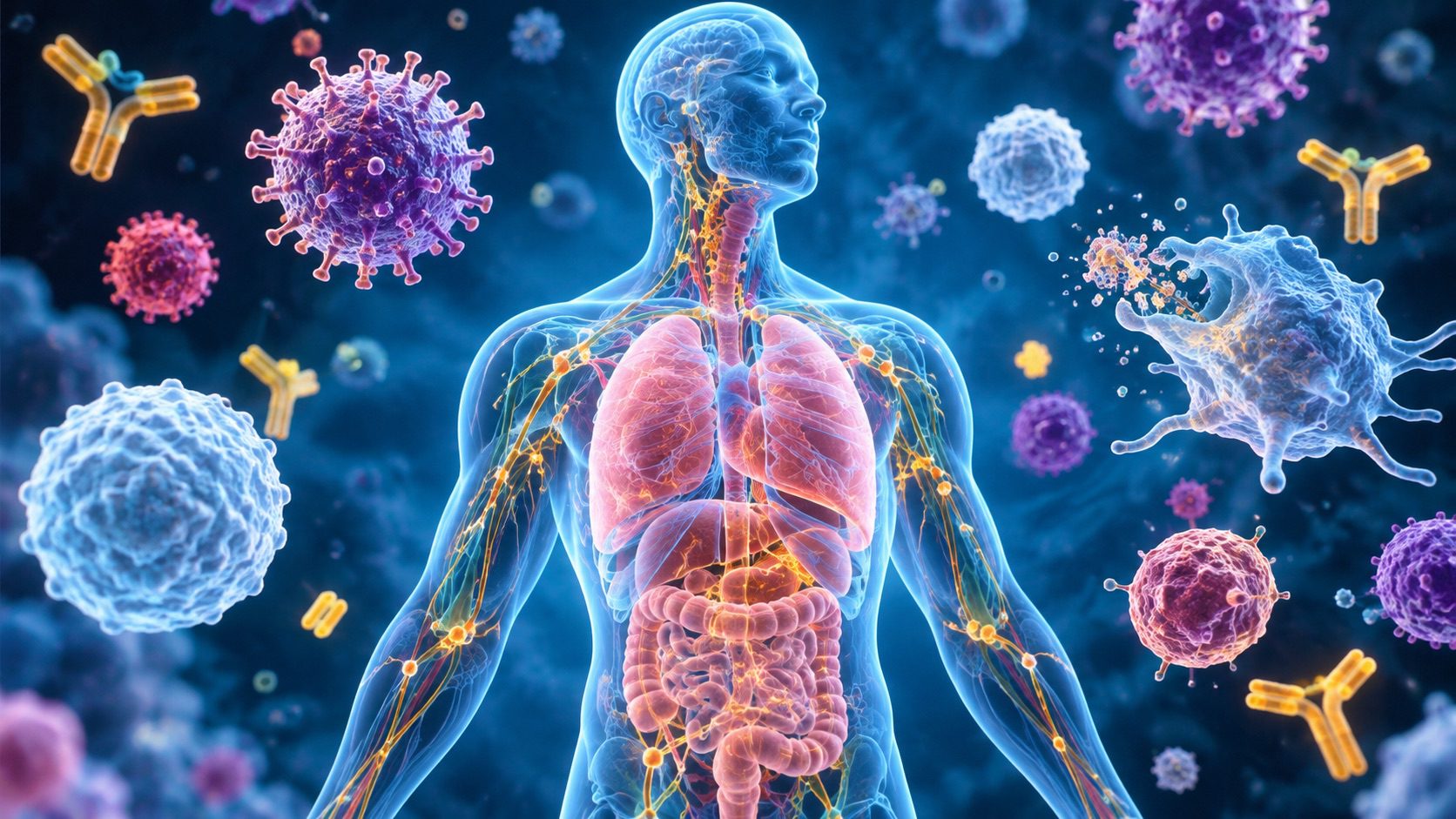
Immunology research is changing how scientists understand the body’s ability to recognise infections, respond to vaccines and protect itself from disease. The immune system was once commonly described as a defence network that identifies and destroys harmful organisms. New research shows that its role is much broader. Immune cells communicate with organs, respond to changes in the surrounding environment and adapt throughout a person’s life.
Advances in genetics, molecular biology and single-cell analysis are helping researchers examine these processes in greater detail. Scientists are now investigating why immune responses differ between individuals, how inflammation contributes to chronic illness and whether the body’s natural defence mechanisms can be directed towards more effective treatments.
These developments are expanding knowledge across infectious diseases, cancer, autoimmune conditions and age-related health problems.
1. Mapping How the Immune System Changes Throughout Life
One important development in immunology is the use of single-cell analysis to understand how immune cells develop and change over time. Instead of studying blood or tissue as a single mixture, researchers can examine individual cells and identify differences in their activity and function.
In September 2026, researchers at The Jackson Laboratory and collaborating institutions reported a single-cell atlas of the healthy human immune system across the lifespan. Published in Nature Communications, the study examined more than one million immune cells from 167 healthy individuals ranging from two months to 105 years of age.
The findings showed that the immune system changes considerably from infancy through adulthood and older age. Infants, for example, displayed distinct immune-cell populations and antiviral activity that differed from those observed in adults. Older individuals also showed changes in immune-cell composition rather than a simple, uniform decline in immune function.
This type of research provides a reference for understanding what healthy immunity looks like at different ages. It could help scientists investigate why certain infections affect children and older adults differently and how vaccination strategies might be improved.
2. Genetic Research Is Revealing How Immune Cells Work
Genes influence how immune cells recognise threats, communicate with one another and respond to inflammation. However, identifying a gene associated with a particular immune function does not always explain exactly how it behaves in different biological situations.
Researchers are therefore moving towards functional genetic studies that examine how genes influence immune-cell activity.
A study published in Cell on 28 August 2026 used genome-scale perturbation experiments involving primary human CD4-positive T cells. The research examined gene activity across millions of cellular observations to identify regulators involved in different T-cell programmes.
CD4-positive T cells play an important role in coordinating immune responses. They help activate other immune cells and influence how the body responds to infections and abnormal cells.
The study’s approach provides a more detailed picture of how genetic instructions operate within immune cells. In the longer term, this knowledge could help researchers identify targets for treating autoimmune diseases, improving cancer immunotherapy and understanding why immune responses vary between individuals.
3. Research Is Examining the Connection Between Immunity and Inflammation
Inflammation is an essential part of the immune response. It helps the body respond to infections and repair damaged tissue. Problems can arise when inflammatory activity becomes excessive, persists for too long or occurs in the wrong place.
Scientists are investigating how immune cells regulate inflammation and what happens when these control mechanisms fail.
Research published in Nature Immunology in October 2026 examined the role of autophagy in regulating inflammation in the lungs. Autophagy is a cellular process through which cells break down and recycle damaged or unnecessary components. The study found that autophagy in alveolar macrophages helps limit the expression of interleukin-1 alpha, a molecule involved in inflammatory signalling.
The findings suggest that cellular recycling mechanisms can influence how ready the lungs are to respond to respiratory infections. They also highlight how immune regulation involves more than switching defence mechanisms on or off.
Although the research offers useful insight into lung immunity, further studies are needed to determine how these findings could translate into treatments for people with inflammatory or respiratory diseases.
4. Understanding Why the Immune System Sometimes Attacks the Body
Autoimmune diseases develop when the immune system mistakenly targets the body’s own tissues. Conditions such as rheumatoid arthritis, lupus and multiple sclerosis involve different immune pathways, which helps explain why their symptoms and treatment requirements vary.
Researchers are studying how immune tolerance works. Immune tolerance refers to the mechanisms that prevent immune cells from attacking healthy tissues. Regulatory T cells are particularly important because they help control excessive immune activity.
A September 2026 research briefing in Nature Immunology examined how inflammatory signals can destabilise regulatory T cells. Laboratory findings showed that changes involving the IRF4 gene regulatory region could interfere with these cells’ ability to maintain their normal identity and suppressive function.
This research may help explain how inflammation can contribute to the breakdown of immune control. It could also inform future approaches to autoimmune disease treatment, although laboratory findings do not establish that a treatment based on this mechanism is ready for clinical use.
5. Immunology Is Influencing the Future of Cancer Treatment
Cancer immunology is one of the areas where improved understanding of immune-cell behaviour is already influencing medical treatment. Rather than attacking cancer cells directly, some therapies aim to help the immune system recognise and destroy them.
Checkpoint inhibitors, CAR T-cell therapies and therapeutic cancer vaccines are examples of approaches that use or modify immune responses.
Researchers are now examining how cancer cells avoid immune recognition and why some patients respond to immunotherapy while others do not.
A study published in Nature Immunology on 22 September 2026 investigated how metastatic cancer cells release structures called migrasomes containing tumour antigens. These structures can help activate CD8-positive T cells through a process known as cross-presentation.
CD8-positive T cells are capable of identifying and destroying abnormal cells. Understanding how tumour material becomes visible to these cells could help researchers investigate new ways to strengthen immune responses against cancer.
However, cancer immunotherapy does not work equally well for every patient. Tumour characteristics, immune-cell activity and the surrounding tissue environment can all influence treatment response.
6. Vaccines Are Helping Scientists Understand Immune Memory
Vaccination provides another important way to study how the immune system learns from exposure to specific threats. After vaccination, immune cells develop responses that can help the body recognise a pathogen if it encounters it again.
Traditional vaccine research often focuses on antibody levels. Newer approaches examine a wider range of immune activity, including T-cell responses, gene expression, metabolism and interactions between immune cells.
A review published in Nature on 26 August 2026 examined the development of systems vaccinology. This research approach combines molecular measurements, computational analysis and immune monitoring to understand why some vaccines produce stronger or longer-lasting protection than others.
Scientists are also investigating how genetics, metabolic health and the gut microbiome influence vaccine responses. These factors may help explain why individuals can respond differently to the same vaccine.
The broader goal is to improve vaccine design and identify ways to produce more consistent protection across different age groups and populations.
7. What Immunology Research Could Mean for Future Healthcare
The immunology research news today reflects a shift towards understanding the immune system as a complex network that interacts with nearly every part of the body. New research is showing how immune cells change throughout life, how genetic pathways control their behaviour and why inflammation can sometimes become harmful.
These discoveries could influence future treatments for infections, autoimmune diseases and cancer. They may also help researchers develop more effective vaccines and identify biological differences that explain why patients respond differently to treatment.
However, important questions remain. Many discoveries are based on laboratory experiments or early-stage research, and their clinical importance must be confirmed through further studies. Understanding a biological mechanism is only the first step towards developing a safe and effective treatment.
The next stage of immunology research will depend on combining genetic evidence, cell-level analysis and clinical studies. As scientists gain a more detailed understanding of immune activity, healthcare may move towards treatments that are better matched to individual biological needs.